We have wild cats for sale
Prices: $8,000.00 per kitten.
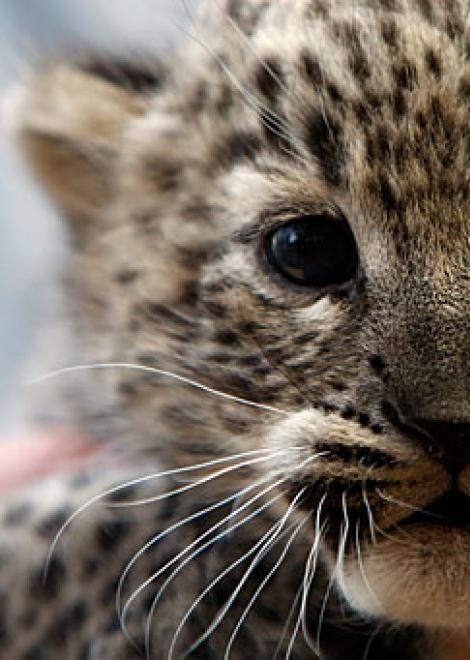
The Asian Leopard Cat is similar in size to a domestic cat, although its appearance varies considerably across its range. In Indonesia, adults typically measure around 18 inches in body length with an 8-inch tail, while those found in the Amur region can reach 24 inches in length with tails measuring up to 16 inches. They stand approximately 16 inches at the shoulder and usually weigh between 10 and 15 pounds.
Coat colour also differs by region, with southern populations displaying yellow or golden fur and northern populations having a distinctive silvery-grey coat. Their chest and lower face are white, and their bodies are marked with striking black spots or rosettes, depending on the subspecies.
Asian Leopard Cats are generally solitary animals, coming together only during the breeding season. In captivity, they can become accustomed to human handling. Females typically give birth to litters of two to four cubs.
Interesting facts
Did you know?
Male Asian Leopard Cats help raise their cubs alongside the mother. This level of paternal care is quite unusual in the animal kingdom, as relatively few male mammals take an active role in rearing their young.
Did you know?
If you leave a bowl of water on the ground, an Asian Leopard Cat may use it as a toilet! In the wild, they often defecate in running water, such as streams or rivers. This natural behaviour helps conceal their scent, making it more difficult for predators and other animals to detect them.
Hunting and Diet
The Asian Leopard Cat is a solitary and highly adaptable predator, coming together with other cats only during the breeding season. Primarily nocturnal, it hunts alone under the cover of darkness, stalking prey both on the ground and in the trees. An agile climber, it has been observed hunting rodents several metres above the ground and is also a capable swimmer.
Its varied diet includes rodents, birds, insects, reptiles, amphibians, fish, eggs, and other small mammals, occasionally including small deer. In some regions, rodents make up the vast majority of its diet, and the species has even adapted to hunting in palm oil plantations where rats are plentiful. Around caves, Asian Leopard Cats have also been known to feed on fallen bats and swifts.
In captivity, Asian Leopard Cats can become accustomed to human handling, although they naturally remain independent and solitary animals.
Habitat and Range
The Asian Leopard Cat is a small wild feline, similar in size to a domestic cat, found across much of Asia. Its range stretches from Indonesia through Southeast and East Asia to Korea and the Russian Far East, extending west into Pakistan and eastern Afghanistan. A unique subspecies, the Iriomote Cat, is found only on Japan's Iriomote Island, where fewer than 100 individuals remain in the wild.
Highly adaptable, the Asian Leopard Cat thrives in a wide variety of habitats, including tropical and coniferous forests, grasslands, scrubland, river valleys, coastal regions, farmland, and mountainous areas up to 3,000 metres above sea level. Although naturally wary of people, it can sometimes be found living on the outskirts of villages.
Its striking coat ranges from silvery grey to golden-yellow or honey in colour, with bold black or dark brown markings. Depending on the subspecies, these markings may appear as arrowhead shapes, spots, rosettes, or a combination of all three. The background colour also varies from very pale to richly coloured, providing excellent camouflage in its natural environment. Agile and athletic, the Asian Leopard Cat is an accomplished climber, often resting in trees or hollow logs. Unlike many felines, it is also a confident swimmer and is frequently found near water.
Conservation Status
Due to its wide distribution, the Asian Leopard Cat is currently classified as Least Concern on the IUCN Red List and is not considered globally threatened. However, the species still faces significant challenges in parts of its range, including habitat loss, human encroachment, and hunting. In some regions, such as China, large numbers have historically been killed for the fur trade, with estimates suggesting that around 150,000 cats were taken annually during periods of high demand.
Social Behaviour and Reproduction
Asian Leopard Cats are generally solitary animals, coming together only during the breeding season and while raising their young. Like many other felines, they maintain defined territories through scent marking. Males typically occupy larger territories than females, averaging around 3.5 km² compared with 2.1 km² for females, and their ranges often overlap with those of several females.
The breeding season varies depending on location. In the southern parts of their range, Asian Leopard Cats may breed throughout the year, while populations further north usually give birth in spring, around May. After a gestation period of approximately 65 to 70 days, females give birth to litters of one to four kittens. The kittens open their eyes between 5 and 15 days after birth and reach sexual maturity at around 8 to 12 months. In captivity, Asian Leopard Cats can live for more than 15 years.
Size and Appearance
Given the Asian Leopard Cat’s extensive geographic range and ability to adapt to a wide variety of habitats, it is not surprising that the species has developed several subspecies, each with subtle differences in size, appearance, and colouration. Although generally similar in size to a domestic cat, individuals can vary considerably across their range, with the smallest specimens found in the Philippines and the largest occurring in the colder northern regions.
Their coat colour varies from fawn and pale yellow to ochre, silver-grey, and darker grey-brown shades. Northern populations have thicker, denser fur than their southern counterparts, an adaptation that helps protect them against colder temperatures.